
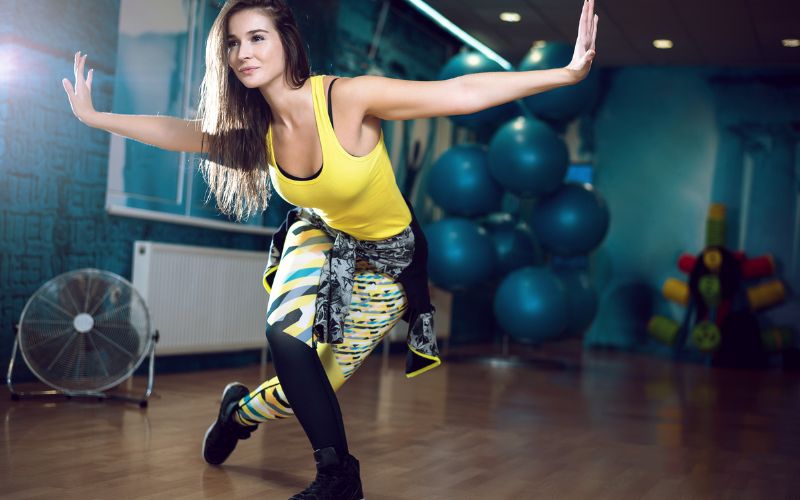
There is a particular challenge that emerges in the fitness journeys of Singapore adults in their mid-thirties and beyond: the training modalities that produced reliable results in their twenties become progressively harder to sustain, either because joint stress from high-impact formats accumulates more noticeably, because the motivational pull of purely performance-oriented training fades as life priorities shift, or because the social isolation of solo gym floor training no longer suits what they need from their fitness routine. Zumba classes singapore gyms offer have emerged as one of the more practically effective solutions to this challenge, combining genuine cardiovascular training stimulus with coordination development and social engagement in a format that consistently produces high attendance rates among Singapore’s over-35 demographic.
The Cardiovascular Physiology of Zumba Training
Zumba’s cardiovascular effectiveness is often underestimated because its social and enjoyable surface presentation does not match the cultural expectation of what serious cardiovascular training looks like. The physiological reality, documented across multiple exercise science studies examining heart rate response during Zumba participation, is that a standard sixty-minute Zumba class produces cardiovascular demand equivalent to moderate to vigorous intensity continuous exercise, consistently elevating heart rate to between sixty and eighty-five percent of maximum across the session duration.
Energy Expenditure and Metabolic Demand
The interval structure of Zumba, which alternates between higher-intensity Latin dance sequences and lower-intensity recovery choreography, produces a cardiovascular training pattern that resembles interval training more than steady-state continuous cardio. This interval-like structure is associated with both the cardiovascular adaptation benefits of sustained moderate intensity work and the metabolic elevation effects of repeated intensity variation.
Research measuring caloric expenditure during Zumba classes in adults aged thirty to sixty consistently reports values between three hundred and six hundred kilocalories per sixty-minute session, varying with participant fitness level, intensity of participation, and the specific choreographic content of the class. For Singapore adults over thirty-five who need cardiovascular exercise that is sustainable across multiple sessions per week without the joint impact accumulation of running or high-intensity jumping formats, this metabolic output represents genuinely productive cardiovascular training in an accessible format.
VO2 Max Development Through Regular Participation
Cardiovascular adaptation, specifically improvement in maximal aerobic capacity measured as VO2 max, requires regular training at intensities sufficient to challenge the cardiovascular system progressively. Studies tracking VO2 max changes in sedentary to moderately active adults over eight to twelve weeks of twice-weekly Zumba participation report meaningful improvements in aerobic capacity that are comparable to those produced by equivalent frequency moderate-intensity continuous training.
For Singapore adults over thirty-five whose VO2 max has declined from inactivity or whose previous exercise history has been predominantly strength-focused without cardiovascular training, consistent Zumba attendance provides an accessible entry point to cardiovascular development that the more intimidating intensity demands of HIIT and running formats do not offer.
Coordination Development as a Health Outcome
The coordination demands of Zumba are frequently dismissed as incidental to the cardiovascular training purpose of the class. This dismissal undervalues what neuroscientists and geriatric health researchers identify as one of the most clinically significant benefits of dance-based exercise for adults over thirty-five: the development and maintenance of neuromuscular coordination that directly affects fall risk, functional movement quality, and cognitive health.
The Neuromuscular Training of Choreographic Learning
Learning and executing Zumba choreography requires the simultaneous processing of temporal rhythm, spatial movement patterns, directionality, and coordination between upper and lower body movement that represents a genuinely complex neuromuscular challenge. This complexity is not merely a physical coordination demand but a cognitive one: the brain must process musical cues, retrieve learned movement sequences, adapt to variations, and coordinate motor output accordingly in real time.
This simultaneous physical and cognitive demand during Zumba participation activates the same neural circuits that research on cognitive reserve identifies as protective against age-related cognitive decline. Regular participation in cognitively demanding physical activities including dance and choreographic fitness formats has been associated with reduced dementia risk in longitudinal research on ageing populations.
True Fitness Singapore’s Zumba classes are delivered by certified instructors who understand both the cardiovascular programming logic and the coordination development objectives that make Zumba more than a purely social fitness activity for Singapore adults over thirty-five. True Fitness Singapore provides the class quality and scheduling consistency that allows members to develop genuine cardiovascular and coordination benefits from regular Zumba participation.
FAQs
Q. – I am fifty-two years old and have not exercised regularly in several years. Is Zumba appropriate as my re-entry to fitness?
Ans. – Zumba is an excellent re-entry format for previously sedentary adults at any age for several reasons. The format allows each participant to self-regulate their effort level by adjusting the range of motion, impact level, and movement intensity of each choreographic sequence without disrupting the class or requiring special modification from the instructor. The social environment reduces the self-consciousness that many returning exercisers feel in traditional gym environments. The choreographic learning provides cognitive engagement that makes sessions feel shorter than equivalent duration cardiovascular exercise on a treadmill. Beginning with two sessions per week and allowing several weeks for cardiovascular adaptation before considering frequency increases is appropriate for returning exercisers.
Q. – My doctor has recommended low-impact cardiovascular exercise following a knee procedure. Can Zumba be modified to be low-impact?
Ans. – Yes. Most Zumba choreography can be modified to eliminate jumping and high-impact movements while retaining the lateral, forward, backward, and rotational movement patterns that produce the cardiovascular and coordination training stimulus. Informing your Zumba instructor of your need for low-impact modification before the class allows them to provide specific guidance on which movements to modify throughout the session. The low-impact modification of Zumba produces lower caloric expenditure and somewhat lower cardiovascular intensity than full-impact participation but provides adequate stimulus for cardiovascular maintenance and coordination development during post-surgical recovery.
Q. – How many Zumba classes per week are needed to produce measurable cardiovascular improvement?
Ans. – Research on Zumba-derived cardiovascular adaptation consistently demonstrates measurable improvement with two to three sessions per week over eight to twelve weeks. Below two sessions per week, the cardiovascular stimulus frequency is insufficient for reliable aerobic capacity improvement, though health maintenance benefits from single weekly sessions still exist. Above three sessions per week, Zumba can be combined with other training formats to provide a comprehensive fitness programme, or continued at higher frequency for members whose primary training modality it represents with additional recovery management.
Q. – I have no dance background and am worried about keeping up with Zumba choreography. How steep is the learning curve?
Ans. – The learning curve for Zumba is more gradual than most first-time attendees expect, for two reasons. First, Zumba instructors are trained to use repetitive choreographic sequences that recur across a class, allowing participants to learn the patterns through repetition within a single session rather than requiring pre-existing dance knowledge. Second, the social norm in Zumba classes is that participants at all skill levels attend together, and the format explicitly accommodates this diversity by designing choreography that works across a wide range of coordination and dance backgrounds. The expectation is engagement and effort rather than technical perfection, which removes the performance pressure that dance classes with formal technique standards create.
Q. – Does Zumba provide adequate training stimulus for weight management alongside dietary management, or is it primarily a mood and enjoyment activity?
Ans. – Zumba provides genuine metabolic stimulus that contributes meaningfully to weight management goals when combined with appropriate dietary management. The caloric expenditure per session is comparable to other moderate-intensity cardiovascular formats, and the high attendance consistency that Zumba produces relative to less enjoyable formats means that its cumulative weekly energy expenditure contribution is often higher in practice than more intensive but less consistently attended alternatives. Treating Zumba as both a genuine metabolic tool and an enjoyable activity is not a contradiction, and the formats that produce the highest long-term adherence, which is the primary driver of weight management outcomes, are precisely those that members find genuinely engaging rather than merely effective.